

Leg discomfort is easy to brush off. Maybe your calves cramp during walks, or your legs feel unusually tired after standing. “That’s normal,” you tell yourself. “Isn’t it?”
In some cases, those symptoms are harmless. However, if you’re experiencing recurring leg pain, it can signal a circulation problem that you shouldn’t ignore.
Peripheral artery disease (PAD) develops when your arteries narrow or become blocked by fatty deposits, reducing blood flow to your legs and other parts of your body. This condition affects millions of Americans. It often progresses gradually, which can make the symptoms easy to overlook until they become serious.
At Shaheen Vascular, patients receive advanced vascular evaluation and treatment designed to identify the underlying cause of circulation problems before serious complications develop.
What Is Peripheral Artery Disease?
Peripheral artery disease occurs when plaque builds up inside your arteries, a process known as atherosclerosis. Over time, these fatty deposits narrow your arteries and reduce the amount of blood that can flow to your muscles and tissues.
PAD most commonly affects the legs, but it can also impact circulation in the arms, stomach, and head. Symptoms often appear in the legs first because they require so much blood flow during movement and exercise. The symptoms may be more difficult to detect in areas that are less mobile.
Reduced blood circulation can lead to pain, weakness, numbness, and delayed healing. PAD is also associated with an increased risk of heart attack, stroke and coronary artery disease, which is why early diagnosis is so important.
What Are the Early Warning Signs of PAD You Shouldn’t Ignore?
Peripheral artery disease often develops gradually. Many patients ignore the earliest symptoms or mistake them for normal aging or poor conditioning. However, the body frequently gives warning signs before circulation problems become severe.
Recognizing these symptoms early can help prevent worsening pain, mobility limitations, chronic wounds, and more serious cardiovascular complications. Watch for the following signs that you should schedule vascular evaluation:
Your Legs Cramp During Walking
One of the most common symptoms of PAD is leg cramping during walking or exercise. Known as claudication, this pain often develops in the calves, thighs, hips or buttocks and typically improves with rest. Unlike ordinary muscle soreness, PAD-related cramping tends to occur in a predictable pattern after a certain amount of activity.
You Have Leg Pain That Keeps Returning
Recurring leg discomfort may also signal reduced circulation. Some patients describe their legs as feeling heavy, tight, weak or fatigued even after mild activity. Circulation-related pain often does not fully improve with stretching, hydration or rest.
Your Legs or Feet Frequently Feel Cold
Poor circulation can make one foot or leg feel noticeably cooler than the other. Reduced blood flow limits the body’s ability to maintain normal temperature in the affected area. Cold feet combined with pain, numbness or discoloration may indicate a clogged artery or reduced arterial circulation.
You Feel Numbness or Weakness in Your Legs
PAD may also cause numbness, tingling or weakness in the legs. Reduced oxygen-rich blood flow can make walking and daily activities more difficult over time.
You Develop Wounds That Heal Slowly
Cuts, blisters, or sores on the feet and legs that heal slowly may signal restricted circulation. Poor wound healing is considered one of the more serious warning signs of PAD because it can increase the risk of infection and tissue damage.
You notice Skin, Hair or Nail Changes
Reduced circulation can gradually affect the appearance of the skin and nails. Common signs include:
- Shiny skin on the legs
- Hair loss on the lower legs
- Poor nail growth
- Skin discoloration
- Weak or faint pulses in the feet
You Experience Erectile Dysfunction
In some men, erectile dysfunction may be associated with reduced circulation caused by peripheral artery disease, particularly in patients with diabetes. Because blood flow affects vascular health throughout the body, erectile dysfunction can sometimes be an early warning sign of arterial disease.
How Are Vascular Causes of Leg Pain Diagnosed?
At Shaheen Vascular, vascular evaluation begins with a detailed physical examination and circulation assessment. Diagnostic testing for PAD and other vascular conditions may include:
- Ankle-brachial index (ABI) testing
- Ultrasound imaging
- Doppler vascular studies
- Angiography
- Blood testing
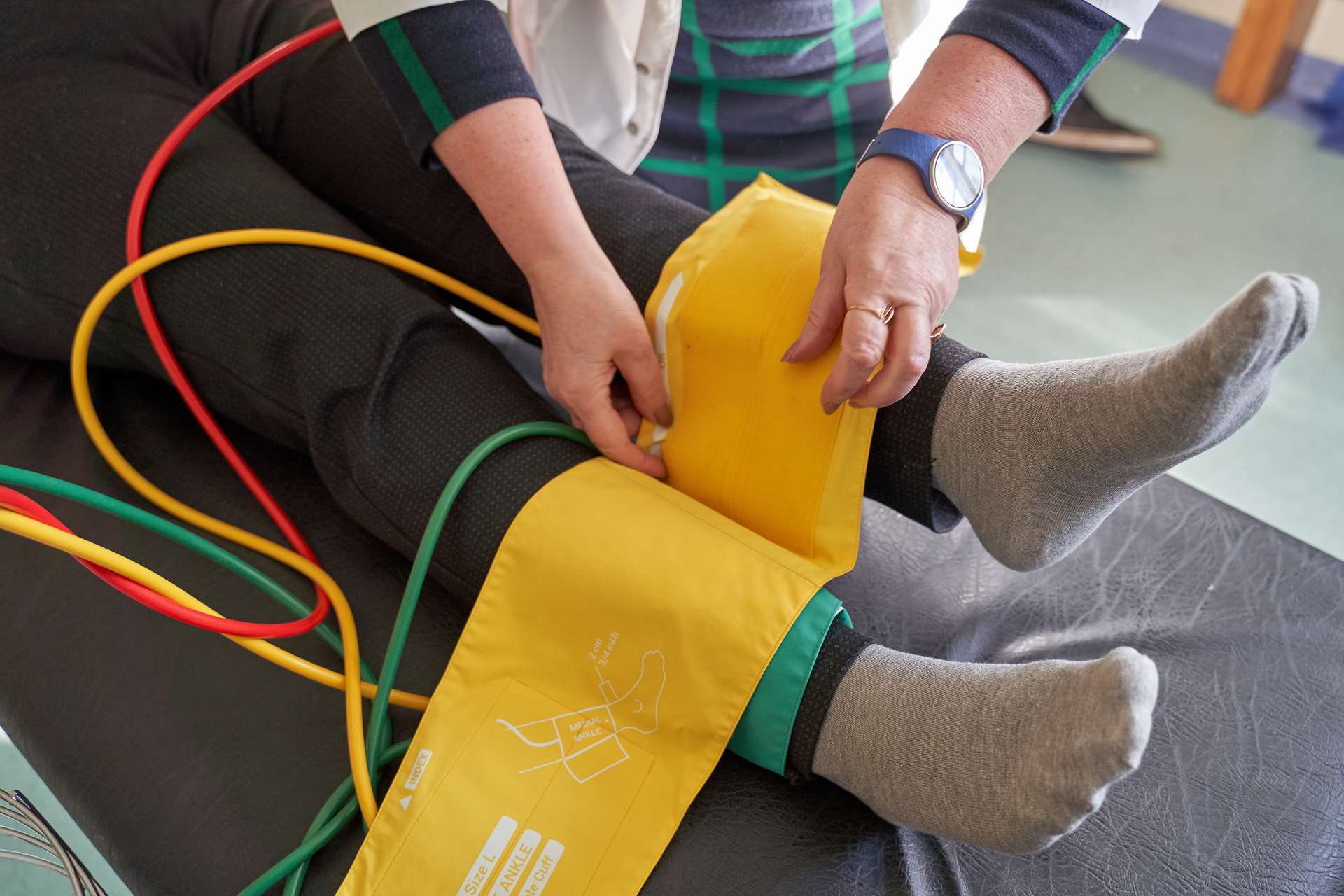
ABI testing compares blood pressure in the ankle and arm to evaluate circulation. Ultrasound and angiography help identify narrowed arteries, venous blockages or other circulatory abnormalities.
Because symptoms of PAD, varicose veins, deep vein thrombosis and venous insufficiency can overlap, accurate diagnosis is essential for selecting the right treatment plan.
How Is Peripheral Artery Disease Treated?
Treatment for peripheral artery disease focuses on improving circulation, reducing symptoms and lowering the risk of serious complications such as heart attack, stroke or limb loss. For some patients, treatment may begin with conservative measures such as:
- Smoking cessation
- Exercise programs
- Blood pressure management
- Cholesterol control
- Diabetes management
- Medications to improve circulation
When arterial narrowing becomes more severe, minimally invasive vascular procedures may be recommended to restore healthier blood flow.
Angioplasty and Stenting
Angioplasty uses a catheter with a small balloon to open narrowed arteries and flatten blockages. In some cases, a mesh stent is placed to help keep the artery open and improve circulation.
Thrombolytic Therapy
If a blood clot is affecting circulation, clot-dissolving medication may be delivered directly into the artery to improve blood flow.
Bypass Surgery
In advanced cases, bypass surgery may be used to reroute blood flow around a blocked artery using either a synthetic graft or a healthy blood vessel from another part of the body.
Find Advanced PAD and Vein Treatment at Shaheen Vascular
Circulation problems can affect far more than comfort alone. Conditions such as peripheral artery disease, deep vein thrombosis, varicose veins and venous insufficiency may impair mobility, wound healing, and overall cardiovascular health.
At Shaheen Vascular, Dr. Raymond Shaheen provides comprehensive vascular care using advanced diagnostic technology and minimally invasive treatment options designed to restore healthier circulation and improve quality of life.
If you are experiencing persistent leg pain, cramping, swelling, or visible leg veins, schedule a consultation to learn whether a vascular condition may be contributing to your symptoms.